One branch. Extraordinary variety.
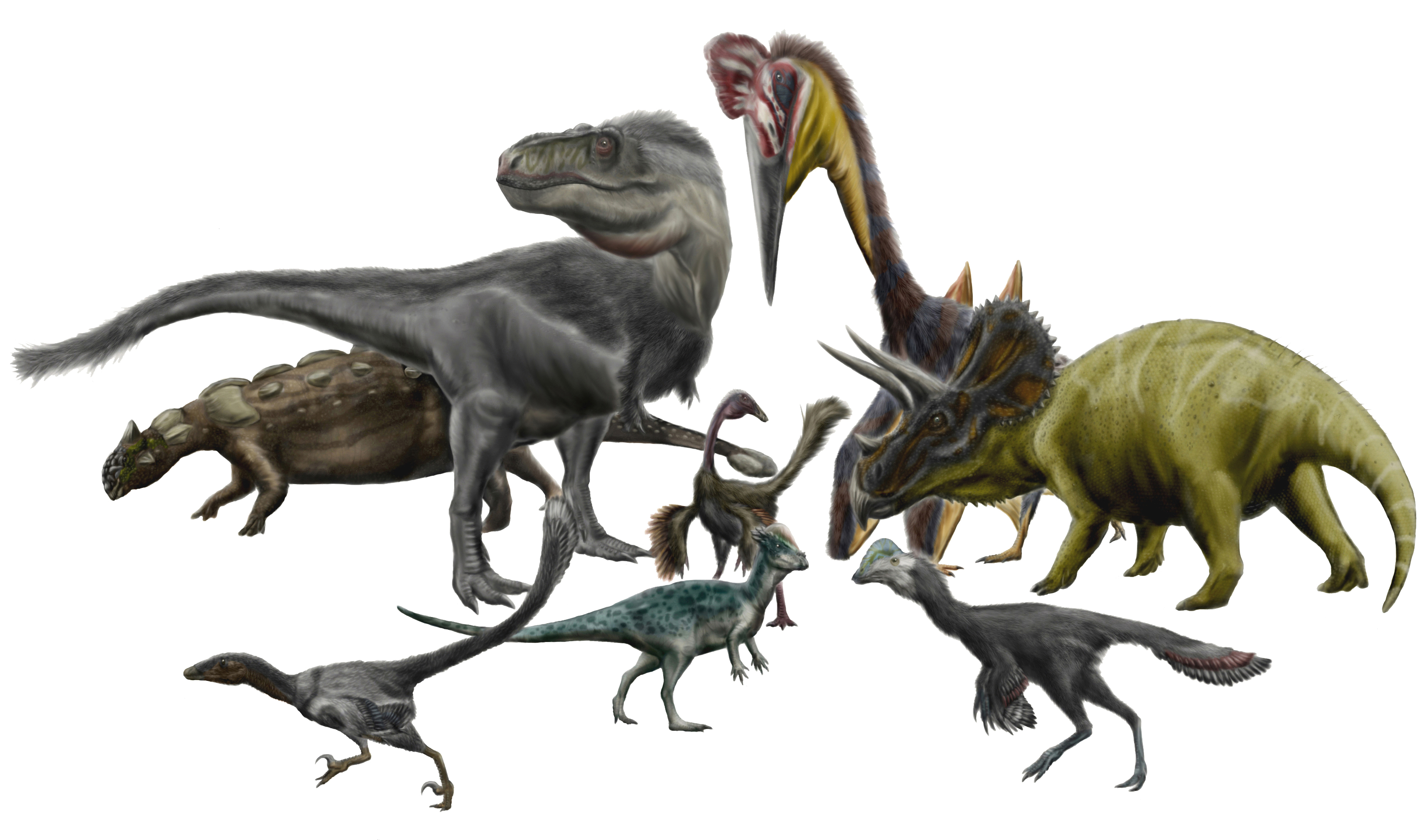
Dinosaurs are a branch of the reptile family tree called Dinosauria. Their shared ancestry connects animals as different as Triceratops, long-necked sauropods and living birds. Being a dinosaur is about evolutionary relationships, rather than size, sharp teeth or a prehistoric appearance. [1]
What do their bones tell us?
An upright hindlimb posture, with the legs beneath the body, is a useful starting point for recognising dinosaurs. Paleontologists compare combinations of skeletal features to work out relationships; a silhouette alone cannot establish ancestry. Dinosaurs belonged to the larger archosaur group, which also includes crocodilians and pterosaurs. [2]
Ancient neighbours, different branches
Pterosaurs were close relatives of dinosaurs on a separate branch. Marine reptiles such as plesiosaurs and mosasaurs also fall outside Dinosauria. Sharing the same world did not make all of these animals members of the same group. [2]
A story that continues today
Dinosaurs appeared during the Triassic Period. The mass extinction about 66 million years ago ended the non-avian dinosaur lineages, while some bird lineages survived. New fossils continue to refine the details of this history. [4]
In the Dinosauria app, each branching point represents a proposed evolutionary relationship. Follow the branches to discover how familiar animals fit into a much larger family.
Continue exploring
- The Dinosaur Family Tree: Understanding Dinosaur Evolution
- Saurischia vs Ornithischia
- Did Birds Evolve from Dinosaurs?
- The Rise of Tyrannosaurs
- When Did Dinosaurs Live? The Triassic, Jurassic and Cretaceous Explained
- Dinosauria Glossary
- How Did Dinosaurs Get So Big?
- Velociraptor and Its Relatives: Beyond Jurassic Park
- How Do We Know What Dinosaurs Looked Like?
- Why Did Dinosaurs Go Extinct?